
The Psychology Behind Why People Buy: 7 Triggers Your Competitors Are Already Using
Your customers aren’t buying your product. They’re buying a feeling.
They don’t want the software — they want to feel in control. They don’t want the moisturizer — they want to feel confident. They don’t want the course — they want to feel capable.
If your marketing only talks about what you sell, you’re competing on price. If it talks about why people buy, you’re competing on emotion — and emotion always wins.
At VK Digital, we’ve studied this pattern across dozens of campaigns, and the same seven psychological triggers show up again and again in the brands that convert. Here’s how they work, and how you can start using them today.
1. Social Proof: "If Others Trust It, I Can Too"
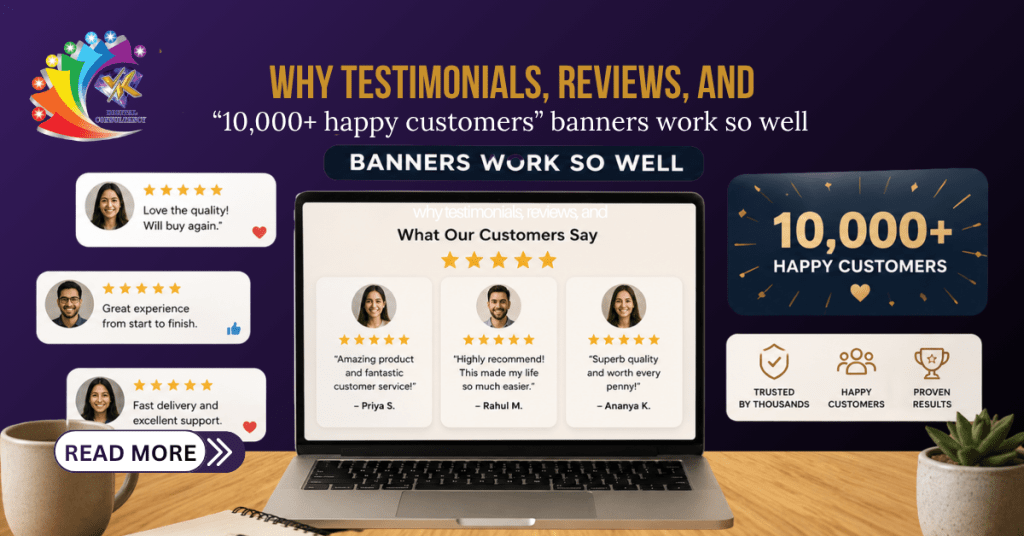
Humans are wired to look at what others are doing before making a decision. It’s why testimonials, reviews, and “10,000+ happy customers” banners work so well — they remove risk from the buyer’s mind before they’ve even engaged with your product.
How to use it:
- Feature real customer reviews prominently on landing pages
- Show live counters (“237 people bought this today”)
- Use case studies with specific, believable numbers — not vague claims
2. Scarcity: "I Might Lose This Opportunity"
The fear of missing out is one of the oldest triggers in marketing, and it still works because it’s rooted in real psychology — we value things more when we believe access to them is limited.
How to use it:
- Limited-time offers with genuine deadlines (fake countdowns erode trust fast)
- Limited stock indicators (“Only 4 left”)
- Early-bird pricing for launches
3. Reciprocity: "They Gave Me Something, I Should Give Back"
When someone receives something of value for free, they feel a subtle pull to reciprocate — often by making a purchase or sharing your content.
How to use it:
- Free guides, templates, or mini-courses before the pitch
- A genuinely helpful blog (like this one) that builds goodwill before asking for anything
- Free trials with no strings attached
4. Authority: "This Person/Brand Knows Best"
People default to trusting those who appear to be experts. This is why doctors in toothpaste ads and “industry-certified” badges still move the needle — our brains use authority as a shortcut for trust.
How to use it:
- Share data, research, and results instead of opinions
- Highlight certifications, awards, or media features
- Let your expertise show through educational content, not just promotional posts
5. Identity: "This Reflects Who I Am"
People don’t just buy products — they buy identities. A person doesn’t buy a Tesla for the horsepower; they buy it to say something about who they are and what they value.
How to use it:
- Speak directly to the identity your audience wants to project (“for founders who move fast,” “for parents who don’t compromise”)
- Use brand voice and visuals that match that identity consistently
- Build community around shared values, not just shared purchases
6. Loss Aversion: "I Don't Want to Miss Out on What I Already Have"
People are more motivated to avoid losing something than to gain something of equal value. This is why “don’t lose your progress” messaging often outperforms “gain more results” messaging.
How to use it:
- Frame offers around what customers stand to lose by not acting (falling behind competitors, missing a price lock-in, losing saved progress)
- Highlight the cost of inaction, not just the benefit of action
7. The Feeling of Ease: "This Makes My Life Simpler"
At the root of almost every purchase is a desire to reduce friction — mental, physical, or emotional. People aren’t just buying outcomes; they’re buying the relief of not having to struggle anymore.
How to use it:
- Emphasize simplicity in your messaging (“Set up in 5 minutes,” “No credit card needed”)
- Remove unnecessary steps from your funnel
- Show the “before and after” transformation, focusing on how much lighter life feels afterward
The Real Takeaway
None of these triggers work in isolation, and none of them work if they’re used manipulatively. The brands that win long-term aren’t the ones exploiting psychology — they’re the ones that understand it deeply enough to communicate real value in a way that actually resonates.
At VK Digital, this is exactly the kind of strategic thinking we bring to every campaign we build — not just posting content, but understanding the why behind every click, share, and sale.
Want a marketing strategy built on psychology, not guesswork? Let’s talk about how VK Digital can help you turn insight into growth.
Written by VK Digital — Strategic Digital Marketing That Understands People, Not Just Platforms.